
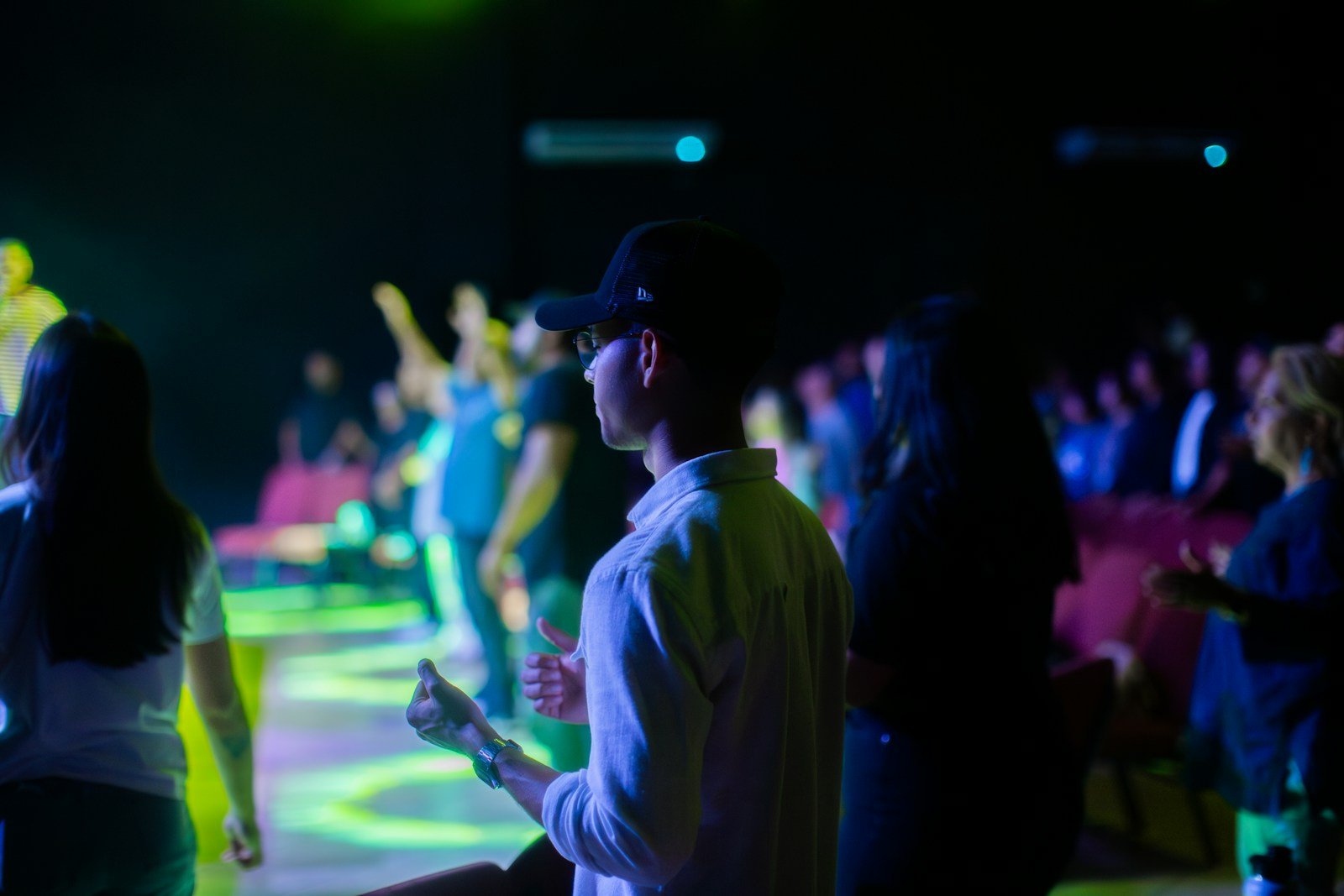
Not every worship moment needs the same visual energy — but most churches treat them like they do.
One of the fastest ways to make a service feel visually “flat” or awkward is using the same type of motion background everywhere. Reflective songs feel rushed. Big moments feel muted. Prayer moments feel strangely busy.
This guide shows how to choose worship motion backgrounds based on *moment*, not preference — so visuals support the flow of the service instead of working against it.


Why matching visuals to the moment matters
Worship isn’t one emotional gear. A service moves through invitation, response, reflection, declaration, prayer. When visuals ignore that flow, the room feels unsettled — even if the songs are great.
Motion backgrounds work best when they quietly reinforce what’s already happening, not when they try to create energy on their own.
A simple way to think about worship moments
You don’t need endless categories. Most worship moments fall into four broad types — and each benefits from a different kind of motion.
Reflective moments (confession, prayer, response)
These moments need space. The safest choice is slow, minimal motion with soft texture and darker tones. Anything visually active pulls attention inward when people are trying to slow down.
Declarative moments (corporate singing, truth statements)
These can handle slightly more presence — but not speed. Think broader motion, brighter tones, and clarity over drama. Lyrics must still lead.
Celebratory moments (praise, high-energy songs)
Energy comes from music and people first. Visuals should support that joy without becoming a performance. Moderate motion, brighter palettes, but still controlled.
Transitions and non-lyric moments
This is where more expressive motion belongs. Fast or rhythmic loops work best *between* moments — never under lyrics.
“When visuals match the moment, the room settles. When they don’t, people feel it instantly.”
Common mistakes when choosing backgrounds by moment
These mistakes usually come from good intentions — but they undermine the flow.
- Using the same energetic background for every song
- Adding motion to “create feeling” instead of supporting it
- Switching backgrounds too often within a moment
- Choosing visuals based on personal taste, not function
- Letting volunteers guess what fits the moment
Quick wins you can apply this Sunday
You don’t need a full redesign — just better matching.
- Group your current backgrounds by “calm” and “celebratory.”
- Use calmer motion for prayer and response moments.
- Stop switching visuals within a single moment.
- Choose backgrounds during prep, not during rehearsal.
- Write one line of guidance for volunteers: “Match the moment.”
What great looks like
When visuals match the moment, worship feels unforced. Nothing distracts. Nothing rushes. The service flows naturally from one response to the next.
The easiest way to achieve this consistently is to work from a curated set of worship motion backgrounds designed with moment and readability in mind — not a random collection of loops. That’s how visuals stop being a gamble and start becoming a support.
